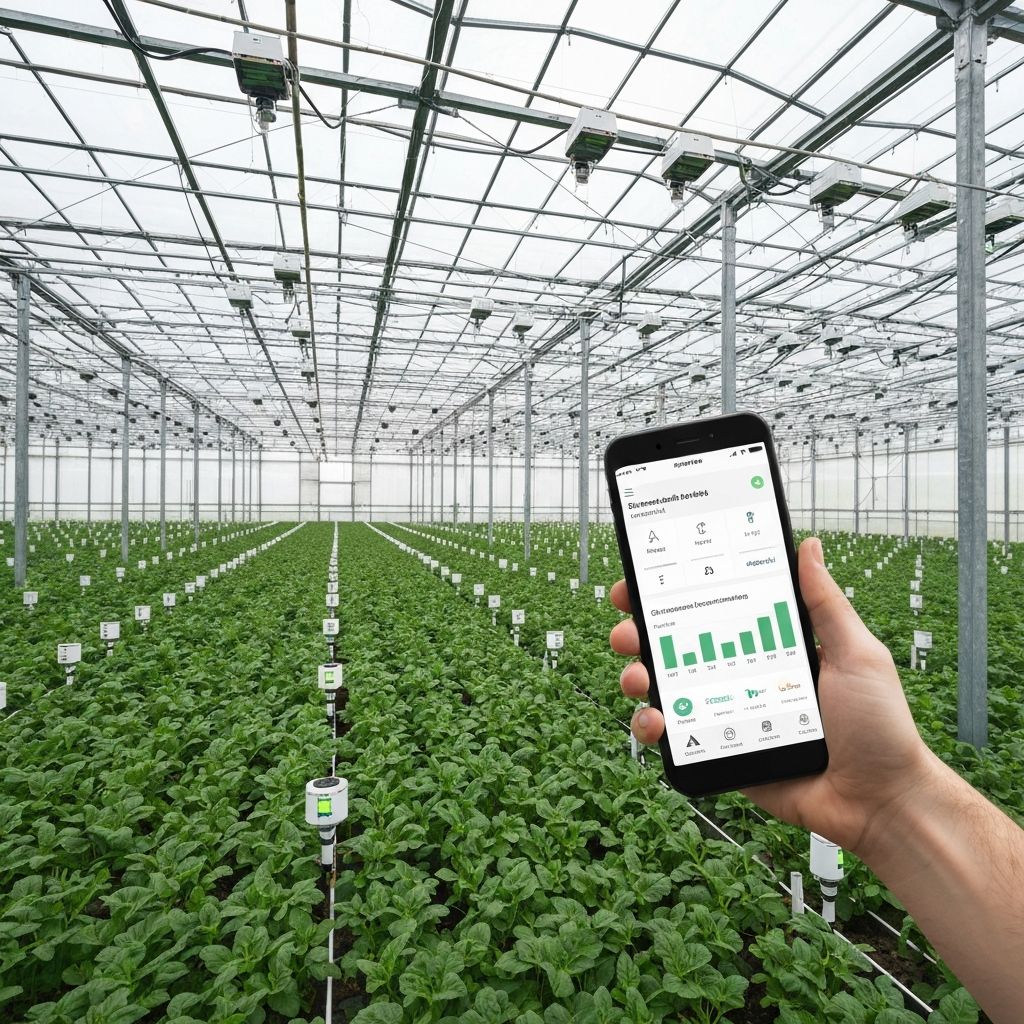
Agriculture is undergoing a digital revolution. IoT sensors, AI-powered analytics, and connected machinery are helping farmers make data-driven decisions, reduce waste, and increase yields — transforming one of humanity's oldest industries.
The Core Technologies
- Soil moisture and nutrient sensors
- Weather stations and microclimate monitoring
- Drone-based crop health imaging
- AI-powered pest and disease detection
- Automated irrigation systems
- Supply chain and marketplace platforms
Potential Operational Benefits
IoT monitoring can make field conditions more visible and help teams plan irrigation, fertilization, and equipment use. The practical effect depends on the crop, location, data quality, and implementation, so outcomes should be evaluated against a documented local baseline.
Example AgriTech Architecture
An AgriTech platform could combine IoT sensor data, a mobile marketplace, and crop information in one workflow. Any deployment should be designed around local connectivity, device availability, farmer workflows, and the quality of available agronomic data.
Challenges and the Road Ahead
Connectivity remains the biggest challenge in rural agricultural regions. Offline-first architectures, LoRaWAN networks, and satellite connectivity are bridging this gap. As 5G expands into rural areas, the potential for real-time precision agriculture will grow exponentially.
Tags:
Share: